Bramley- a truly British icon

We have started our early season picking of Bramley apples. England is the only country where a major distinction is made between cooking and dessert apples, but these days only one variety remains to maintain the tradition of English cooking apples - the famous Bramley apple. The Bramley apple was raised by Mary Ann Brailsford of Southwell, Nottinghamshire, UK, it is believed the first tree was planted between 1809 and 1813, and amazingly the original tree still bears fruit today.Bramley is the cook’s favourite as it has a unique ability to retain its strong apple flavour during cooking and when cooked, the texture becomes moist, wonderfully light and airy but with individual cells preserved to provide a superb crunch. Check the following link for delicious recipes
http://www.bramleyapples.co.uk/recipes.htm


Did you know?

Kent is one of the counties where most Bramley’s are grown.

Crop and Weather Summary

July 2007

Mean temperatures were generally close to or slightly below average. Most of the showers were often very heavy and thundery with some areas experiencing localised flooding due to the intensity of the rain. The very last few days of the month brought a change in weather type with a few dry and sunny days for most places. Mid July we experienced quite a few storms with hail, causing some significant damages to our crop
Cherries are have finished, we had a good crop volumes but is was a challenging season with a lot of waste due to the wet weather.
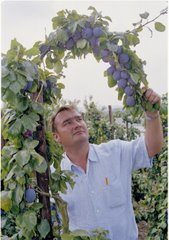
All plums have developed a week earlier than previous season, as have all crops this year. The early plum Opal is a good sample on size, colour and sugars. Jubilium a larger fruiting plum produced a good quality crop as well.
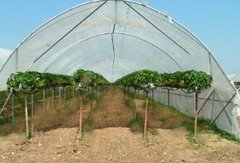
Strawberries - new planting of Albion coming on stream with good quality and volumes. The second crop of the table tops has been planted and it is being established, the first pick is expected in mid August.
The First of the English season apple Discovery, a traditional early red dessert variety, was picked at the end of July- fantastic colour and quality.

Discovery- the English apple season has started!


Discovery, one of the most popular English early red dessert apples, is being picked at Mansfields this week. Usually the Discovery is not picked until mid and late August but again like with other crops this year it was ready a lot earlier than usual. Discovery is a small proportion of the apples varieties we grow on our farms but it gives us ahead start to the new English season. It is often thought that Discovery is an old variety but it was found in the late 1940 by a workman on an Essex fruit farm, and it is a seedling of Worcester Pearmain, a 19th century early-season apple variety, which is also grown at Mansfields. Discovery is bright red, with yellowish green backgrond colour and it has a firm, crispy texture, with a fairly sweet, refreshing flavour, sometimes with a hint of strawberry.

Hailstones- grower’s nightmare


On Sunday 15th July we were hit quite badly with a hail storm on two farms, where we grow a premium variety Braeburn apples, causing damages on 80% of the crop. The damages were very severe, some apples were hit so hard they split the skin and left large indentations. Hail, the size of a golf ball, was reported on the local news, doing some damages to the vehicles in the area

Cherry and Soft Fruit Show, 2007


On Friday, Mansfields took part in the 77th Cherry and Soft Fruit Show at the County Agricultural Showground in Detling and we were awarded 1st prizes in 5 categories, 2nd prize in 4 categories and 3rd prize in 5 categories. We have also won the JP Distributors Bowl-Highest points all classes and the Fyffes monro group bowl- for the Highest points collected in the categories in Division 1

Cherry harvesting time at Mansfields!


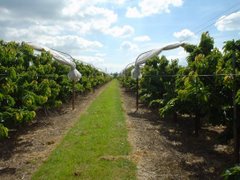
The 2007 harvest began a week earlier than usual. The traditional cherry picking in Kent has changed, the modern commercial cherry orchards against traditional are easier to pick, trees are kept smaller and here at Mansfields we grow them in 2 and 3 row beds, with some of our cherries having rain covers and anti- bird protection.
The cherry season is short, usually up to 4 weeks but is very dynamic, and as proven this year, quite challenging as well. There are a lot of preharvest and postharvest factors that can affect the quality of the cherries. Overall the cherries are very delicate product and Dr. Max Patterson, Professor and Horticulturist at Washington State University, has defined them as:
1. A bag of water, air, and organic chemicals
2. A series of compartments within compartments, individually packaged in a larger master package
3. A fragile, living entity at the cellular level as complex as human life; while at attached to the tree, nourished by the tree; but when detached, must live off of itself at the mercy of the environment.
The final definition implies the fragile nature of a cherry and the challenge facing today’s production. It is critical to harvest during the cooler periods of the day, when the cherries are cooler, and to keep them in the shade once they are harvested. The cherries are picked when firm and when have reached full maturity and colour as they will not ripen off the tree. After being picked it is crucial for the cherries to be held in temperature controlled environment. They are being transported to the packhouse in temperature controlled vehicles and held in humidified chilled air to minimize the vapor pressure difference between the fruit and the external air- warmer cherries lose water much more quickly than cooler cherries!
The selection and packing of the cherries is also done in temperature control environment and the completed product is sent out within 48 hours of being picked.
Our aim is to deliver to the customer a farm-fresh fruit, which are just naturally more delicious and nutritious!

Crop and weather summary

June 2007
“Flaming June”… Remember those long, warm, sunny days in the summer...? Well, not this summer so far. It is easy to forget that the first half of June was with a fine and warm start, although lacking notable hot days or prolonged sunny periods. The rains did not start until the 12th or 13th, but most parts of the country have had some rain, little or much, on every single day since then. Some regions of the country received 300-400% above average rainfall for the month, setting their wettest June on record. Sunshine was generally below average across the UK, with some areas having their dullest June on record. This weather did not reflect very well on the crop and because of the very heavy rains we have lost about 30% of our cherry production due to splitting. The dull weather has also delayed the development of our everbearer strawberry varieties- at present our production is a week behind. But on the other hand the apples and the pears are growing well, with both- a good crop load and sizing, as they have taken up a lot of water. Slowly but surely we have begun the cherry picking, varieties like Summit and Sylvia are already on the shop shelf. We have also finished our early main crop of Elsanta strawberries. Thinning of plum crop was completed in June, and apple thinning begun at the end June and will continue into July.

Crop thinning

One of the commonly used tree management practices is thinning of the fruit. The general purpose of the thinning is to improve fruit size and quality- the removal of fruit allows for the elimination of small, damaged and malformed fruits. In some instances fruit thinning aids the prevention of irregular cropping year on year. The amount of fruit removed off the trees depends on the season and the crop load but in some cases it can be up to 50% on plums and 30% apples . This will reduce the overall crop load and obtain the highest quality and volume of marketable fruit produced within the optimum size profile.

Life is a bowl of cherries... from Mansfields


22 June 2007

The summer fruit season is ripening and our first cherries are nearly upon us. The crop load is the best we have produced so far, some varieties have thinned naturally, allowing the surviving cherries to grow larger.
Careful pickers will hand pick the darkest cherries, which are the sweetest and juiciest, full of fruity flavour, and they’ll just get bigger and sweeter as the season progresses.
Washed and freshly eaten out of the hand is the best way to enjoy them- the closer to home you buy them, the better you will “savour their flavour”!


Did you know?

Cherries are believed to be native to Asia Minor, the earliest known mention of cherries is by the Greek botanist Theophrastus about 300 BC, although it is believed to have been cultivated even earlier than this time. The Romans carried cherries throughout Europe and England along the routes of conquest during the first century AD.

Residue minimisation approach at Mansfields

15 June 2006
Mansfields are dedicated to seek ways to reducing environmental risks and reliance on pesticides. One of our aims is to reduce pesticide use and minimise residues by following the principles of Integrated Crop Management (ICM). ICM is a cropping strategy in which growers aim to conserve and enhance the environment whilst producing safe and wholesome food commercially.
Integrated Pest Management (IPM) is a part of ICM and involves developing pest control strategies based on environmental control, biocontrol and the use of physical and chemical control agents. Much work has been done by Mansfields to keep the residues to a minimum and now we have conducted a residue free trial in one of our orchards growing Cox, Gala and Russet.
We are aiming to achieve residue free fruit by using the following methods:
1. Autumn applications in combination with a good husbandry like mowing or pulverising after leaf fall to facilitate rapid breakdown of leaves and other orchard litter- this should provide a good control of over-wintering pests and diseases
2. Scab and mildew programme through to petal fall, then reliance on organic compounds
3. Crop monitoring and timed insecticides- we are using pheromone traps to monitor the flight of Codling, Summer Fruit Tortrix and Fruit Tree Tortrix moths, to determine when the threshold for spraying is reached

Crop and Weather Summary

May 2007

We needed rain and we certainly got it in May- approximately 105mm in the South East! According to the Met Office in May there was well above average rainfall across the majority of the UK, with some parts of the country experiencing over 200% of average May rainfall. The weather changed during the second week with dull cold spells and temperatures as low as 10°C during the night. This has not been good for the crop set on apples and pears and the crop has not set as much as we thought. Nevertheless the trees look healthy and should produce good crop. Strawberries are going strong with a high percentage of first class fruit. Cherries are still hanging on and it will not be until mid June before we can say with confidence that they will remain. As for the plums, we are expecting a full crop on Opal and Victoria varieties, and will be thinning in June

Owl boxes

As a part of our environmental strategy we manage our farms to promote the wildlife. One of our objectives is to encourage raptor and owl species by maintaining thicker grass cover along the field margins and the fallow land. Our first owl box has been erected at Waddenhall Farm and we are expecting our first residents. During the summer we are planning to site several more boxes over the holdings.

Partridge in a pear tree… but not at Christmas

A first class job

This week we had our first of many picks from our tabletop strawberries at Loyterton. With the plants, yielding a high percent of first class berries, with uniform shape, good size and colour, and fantastic eating qualities with sugars at their optimum you can fully enjoy the srawberries, one of the most delicious and nutritious fruits.

Did you know?
One serving of strawberries has more vitamin C than one orange!

Health and Safety at Mansfields

We as a company take Health and Safety very seriously. We have set up our own H&S Committee, which includes members of various sectors of our work force to participate and discuss any issues in our H&S meetings.
We have an appointed H&S person who is responsible for carrying out all Risk/ Fire assessments within all our sites, and we have identified and trained First Aiders, Fire Marshals and a nominated Fire Officer. Fire Alarm systems are installed throughout our packhouses and storage areas and we conduct regular Fire Drills, and this is now being implemented on our external sites