“Flaming June”… Remember those long, warm, sunny days in the summer...? Well, not this summer so far. It is easy to forget that the first half of June was with a fine and warm start, although lacking notable hot days or prolonged sunny periods. The rains did not start until the 12th or 13th, but most parts of the country have had some rain, little or much, on every single day since then. Some regions of the country received 300-400% above average rainfall for the month, setting their wettest June on record. Sunshine was generally below average across the UK, with some areas having their dullest June on record. This weather did not reflect very well on the crop and because of the very heavy rains we have lost about 30% of our cherry production due to splitting. The dull weather has also delayed the development of our everbearer strawberry varieties- at present our production is a week behind. But on the other hand the apples and the pears are growing well, with both- a good crop load and sizing, as they have taken up a lot of water. Slowly but surely we have begun the cherry picking, varieties like Summit and Sylvia are already on the shop shelf. We have also finished our early main crop of Elsanta strawberries. Thinning of plum crop was completed in June, and apple thinning begun at the end June and will continue into July.
Crop and weather summary
“Flaming June”… Remember those long, warm, sunny days in the summer...? Well, not this summer so far. It is easy to forget that the first half of June was with a fine and warm start, although lacking notable hot days or prolonged sunny periods. The rains did not start until the 12th or 13th, but most parts of the country have had some rain, little or much, on every single day since then. Some regions of the country received 300-400% above average rainfall for the month, setting their wettest June on record. Sunshine was generally below average across the UK, with some areas having their dullest June on record. This weather did not reflect very well on the crop and because of the very heavy rains we have lost about 30% of our cherry production due to splitting. The dull weather has also delayed the development of our everbearer strawberry varieties- at present our production is a week behind. But on the other hand the apples and the pears are growing well, with both- a good crop load and sizing, as they have taken up a lot of water. Slowly but surely we have begun the cherry picking, varieties like Summit and Sylvia are already on the shop shelf. We have also finished our early main crop of Elsanta strawberries. Thinning of plum crop was completed in June, and apple thinning begun at the end June and will continue into July.
Crop thinning
Life is a bowl of cherries... from Mansfields
22 June 2007
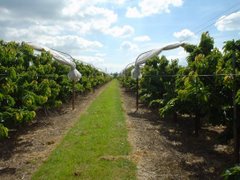
The summer fruit season is ripening and our first cherries are nearly upon us. The crop load is the best we have produced so far, some varieties have thinned naturally, allowing the surviving cherries to grow larger.
Careful pickers will hand pick the darkest cherries, which are the sweetest and juiciest, full of fruity flavour, and they’ll just get bigger and sweeter as the season progresses.
Washed and freshly eaten out of the hand is the best way to enjoy them- the closer to home you buy them, the better you will “savour their flavour”!
Did you know?
Cherries are believed to be native to Asia Minor, the earliest known mention of cherries is by the Greek botanist Theophrastus about 300 BC, although it is believed to have been cultivated even earlier than this time. The Romans carried cherries throughout Europe and England along the routes of conquest during the first century AD.
Residue minimisation approach at Mansfields
Mansfields are dedicated to seek ways to reducing environmental risks and reliance on pesticides. One of our aims is to reduce pesticide use and minimise residues by following the principles of Integrated Crop Management (ICM). ICM is a cropping strategy in which growers aim to conserve and enhance the environment whilst producing safe and wholesome food commercially.
Integrated Pest Management (IPM) is a part of ICM and involves developing pest control strategies based on environmental control, biocontrol and the use of physical and chemical control agents. Much work has been done by Mansfields to keep the residues to a minimum and now we have conducted a residue free trial in one of our orchards growing Cox, Gala and Russet.
We are aiming to achieve residue free fruit by using the following methods:
1. Autumn applications in combination with a good husbandry like mowing or pulverising after leaf fall to facilitate rapid breakdown of leaves and other orchard litter- this should provide a good control of over-wintering pests and diseases
2. Scab and mildew programme through to petal fall, then reliance on organic compounds
3. Crop monitoring and timed insecticides- we are using pheromone traps to monitor the flight of Codling, Summer Fruit Tortrix and Fruit Tree Tortrix moths, to determine when the threshold for spraying is reached
Integrated Pest Management (IPM) is a part of ICM and involves developing pest control strategies based on environmental control, biocontrol and the use of physical and chemical control agents. Much work has been done by Mansfields to keep the residues to a minimum and now we have conducted a residue free trial in one of our orchards growing Cox, Gala and Russet.
1. Autumn applications in combination with a good husbandry like mowing or pulverising after leaf fall to facilitate rapid breakdown of leaves and other orchard litter- this should provide a good control of over-wintering pests and diseases
2. Scab and mildew programme through to petal fall, then reliance on organic compounds
3. Crop monitoring and timed insecticides- we are using pheromone traps to monitor the flight of Codling, Summer Fruit Tortrix and Fruit Tree Tortrix moths, to determine when the threshold for spraying is reached
Crop and Weather Summary
We needed rain and we certainly got it in May- approximately 105mm in the South East! According to the Met Office in May there was well above average rainfall across the majority of the UK, with some parts of the country experiencing over 200% of average May rainfall. The weather changed during the second week with dull cold spells and temperatures as low as 10°C during the night. This has not been good for the crop set on apples and pears and the crop has not set as much as we thought. Nevertheless the trees look healthy and should produce good crop. Strawberries are going strong with a high percentage of first class fruit. Cherries are still hanging on and it will not be until mid June before we can say with confidence that they will remain. As for the plums, we are expecting a full crop on Opal and Victoria varieties, and will be thinning in June
Owl boxes
A first class job
Did you know?
One serving of strawberries has more vitamin C than one orange!
Health and Safety at Mansfields
We have an appointed H&S person who is responsible for carrying out all Risk/ Fire assessments within all our sites, and we have identified and trained First Aiders, Fire Marshals and a nominated Fire Officer. Fire Alarm systems are installed throughout our packhouses and storage areas and we conduct regular Fire Drills, and this is now being implemented on our external sites
Beetle banks at Home Farm, Marshside
Beetle banks are simple, grass-sown raised strips providing habitat for the invertebrate predators of crop pests and other farmland wildlife.
At Home Farm, Marshside in Kent, beetle banks have been built and seeded with a specific grass mix including species such as cocksfoot, Yorkshire fog and timothy mix.. The conditions provide tussocky grass-nesting areas for birds such as skylarks and grey partridge. They also provide breeding and feeding areas for small mammals and insects, feeding areas for owls and other birds of prey, and overwintering refuge for beneficial insects and spiders.
Table top strawberry at Loyterton Farm

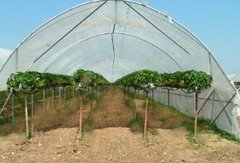
We have grown strawberry for over a decade and this year Mansfields have invested in table- top strawberries at Loyterton Farm. Nearly 170,000 plants of Elsanta strawberries are grown in compost bags and will be producing two crops a year. First plants were planted in March to be picked in May- June, and then will be re-planted in July ready to be picked in September- October. By using this modern farming method the plants should produce higher yield and a consistent quality fruit. The strawberries are going very well, we are pleased how they look and we are expecting to start picking our first crop at the end of this week.
Promising outlook for the 2007 cherry season
Cherries are looking a little more impressive this year. With a very warm April the set looks fantastic and now on towards May some varieties have “thinned down” to a reasonable crop. Colney and Regina look like producing less than 2006 season but they will be big and juicy. Maybe also we will have a crop of Stella- well known for “running” but looks like it is here to stay.Did you know?
Cherries are:
- Fat-free
- Sodium-free
- Cholesterol-free
- A good source of fibre
- And taste great!
Elsanta strawberries- full steam ahead
The strawberry season this year started nearly three weeks earlier due to the very warm weather.Early strawberries Elsanta are well on the way, being picked for two weeks now. The crop looks bright and evenly coloured, with a firm and juicy texture and a balanced sweet/ acidic flavour. Even though last weeks cooler weather is now over, with good temperatures in the day and evening, the berries are ripening in the middle of the plant, giving a real sign that the plant is ready to “move on".
Did you know?
Strawberries are the first fruit to ripen in the spring.
Crop and Weather Summary
April 2007
April was an exceptionally warm month, with all climate districts and regions setting new April records for maximum and mean temperatures. April was very dry, no rain since the 30th of March. Trees are and will suffer on marginal sites, Street farm, Marshside. Planted strawberries are developing without issues. Looks like a good set on stone fruit season and the earlier flowering on all tree crops by at least 10 days has coincided with a very warm April.
Crop and Weather Summary
Subscribe to:
Posts (Atom)